
In-Game Graphics
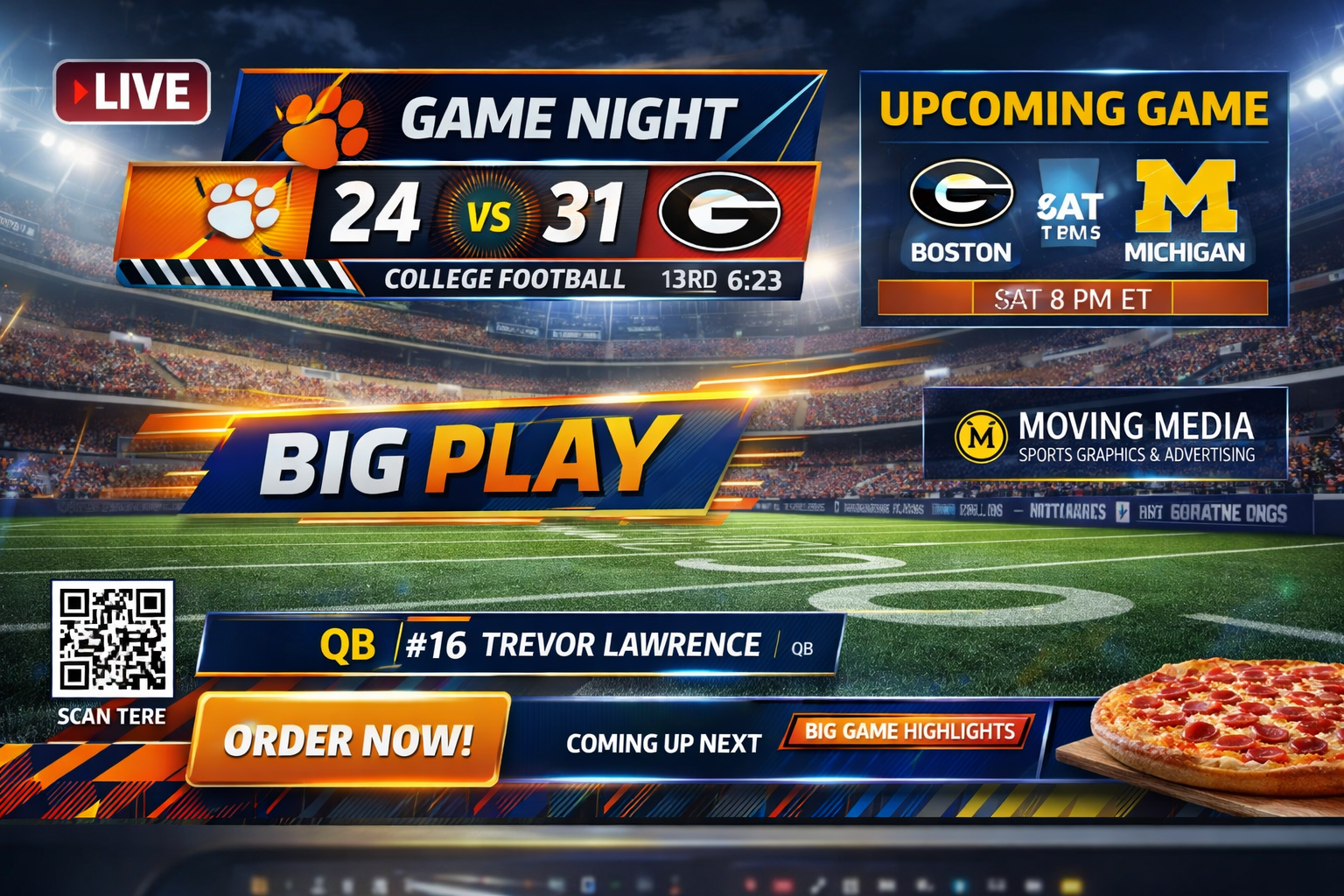
Created By OpenAi
Graphic design is everywhere, but it reaches a whole new level with sports. The speed, emotion, and uncertainty of live sports make it one of the most challenging places for graphic design. With other forms of design, viewers can double check or go back, but with sports graphics and advertising, they have just a few seconds to get their message across. If it does not work, it will not be seen.
Maybe one of the biggest challenges with sports graphic design is speed. When watching a live event, the focus should be on the action, not on graphics. The score bugs, promos, and other advertising need to be quickly understandable without taking any focus away from the action. This creates a need for simplicity. The fonts should be easily readable, the colors should have good contrast, and so on. The ESPN and NBC Sports networks are good examples of how simplicity helps with clear readability under stressful conditions. (https://www.espn.com, https://www.nbcsports.com)
Another reason why sports can be a graphic designer's playground is that the content is so important to begin with, and this is part of the reason why advertising in the world of sports is so effective. The ads are so visually appealing because the designers are choosing fonts, movement, and color that match the level of excitement that the game is giving. The ads and promos that come up during the game are meant to be intense and exciting so that they don't feel disjointed from the rest of the action. This is part of the reason why ads in the world of sports can feel so memorable when compared to regular ads not involving sports. (https://www.adweek.com)
Motion graphics also play a huge role in sports design. Static graphics may appear too slow or even out of place during a live broadcast. This is why motion graphics appear everywhere in sports media. Animated transitions, moving text, and changing logos and colors help grab the viewer’s attention while keeping the broadcast feeling fast and fluid. Motion design has the ability to help maintain the shift from in game action, into ads, and back again. (https://www.motionographer.com)
Sports graphic design also needs to have good brand consistency. Sports teams, leagues, and media organizations use sports graphics in many ways on different platforms, such as live sports broadcasts, social media, and sports apps. As a result, sports graphic designers are not only creating sports graphics but also systems that will work well everywhere, which is a huge challenge in live sports. (https://www.creativebloq.com)
The reason why sports is the ultimate graphic design playground is that it is live, and there is no second chance to correct a confusing graphic or ad that is poorly designed. If it doesn't work, millions of viewers will see it right away. Yet, when it is done correctly, it puts itself so perfectly into the broadcast that it is not even noticed. Sports design is the biggest challenge of graphic design. It shows what matters in design when time, attention, and emotion are all put into something. Sports design is one of the best ways to learn about how graphic design works, not just on a visual standpoint, but on a strategic one too.

A collection of my observations as a designer, breaking down the small details, trends, and creative choices I notice in sports, media, and digital design.
